Experiment Canvas Part 1
Define your hypothesis and how to test it in a low-cost and quick manner.
The Experiment Canvas has two parts. Part 1 will guide you through turning Riskiest Assumptions into a falsifiable hypothesis that you can easily know when an experiment passes or fails. Then you’ll setup an experiment. Part 2 will be about summarizing your results and deciding whether to pivot or move forward.
You’ll fill out one half of the worksheet for Part 1 and the other half for Part 2. As you continue to do experiments to test your assumptions, you’ll have multiple Experiment Canvases to record and track progress.
The goal of experimenting is to learn as fast and cheap as possible. Do experiments to validate or invalidate any assumptions. The results will provide you with confidence in your target users, their problem, and your solution.
 4-6 people
 45 minutes
What you’ll need
- Pens or markers
- Sticky notes
- Riskiest Assumptions
Prerequisite Activities
Downloadable Materials
Instructions
Review target user, problem, and solution
Start with reviewing the target user, their problem, and your solution. Write this on a sticky note and share it with the group to all have the same understanding.
We believe [target users] will solve their problem by [solution behavior].
For Airbnb example,
We believe conference guests have a problem where they don’t have a place to stay because the nearby hotels are mostly booked and expensive. We believe conference guests will solve their problem by paying money to sleep in a stranger’s home as a cheaper accommodation.
Write the riskiest assumption
Select the assumption that you want to test from the Riskiest Assumptions activity. Re-write it on a sticky note and add it to the worksheet.
The riskiest assumptions must be validated and true in order for your solution to be successful.
For example,
For Airbnb to succeed, it is necessary that people would actually pay money to sleep in a stranger’s home.
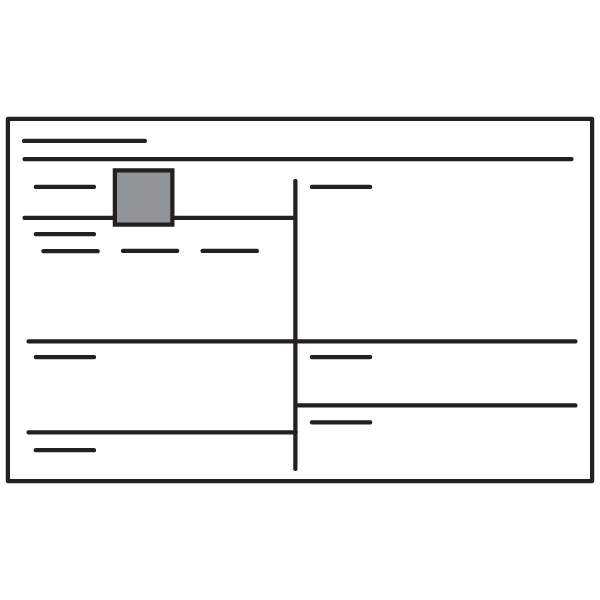
Write as hypothesis
Re-write your assumption into a falsifiable hypothesis. This makes it easy for you to know when your experiment is a pass or fail. Write it on a sticky note and add it to the worksheet.
We believe that [specific, testable action] will drive [specific, measurable outcome] within [timeframe].
The hypothesis statement has three parts:
- Testable Action: What behavior of your solution can test? Be specific.
- Measurable Outcome: What is the minimum criterion for success? Be specific.
- Timeframe: What is the shortest time for you to gain certainty and learn? Time-box your experiments to help you stay on track.
For Airbnb example,
We believe that offering our loft as cheap accommodation ($80 per night) for conference attendees will drive 3 people to pay within 2 weeks.
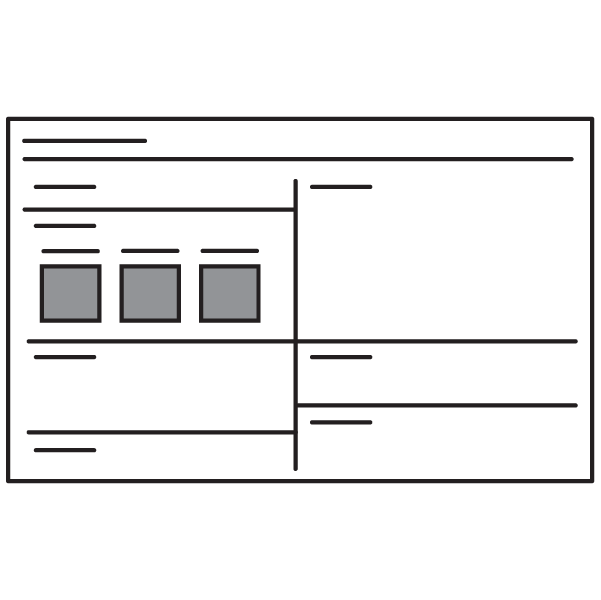
Describe the experiment
Decide what you need to do to test your hypothesis in a low-cost and short time. Write what you will do on a sticky note. Ask: “What is the least expensive way to test the assumption?
Common experiment types:
- Validation interviews with target audience: show your prototype of the value proposition and get feedback.
- Explainer Video: a short animated video to show your idea in less than 2 minutes. Tell the story from your user’s perspective.
- Concierge Test: show the experience and deliver value manually by humans instead of technology.
- Opt-In Tests: create a way for people to learn more about a new product or service and to sign-up for the product or service. This is good for testing the demand and desire for a solution that doesn’t exist yet. Examples: Pop-Up Demos, Sign-up Waitlists, and Website Landing Page.
For Airbnb example,
They created a website called “airbedandbreafast.com” and uploaded pictures of their apartment.
On separate sticky notes, write your experiment name and duration. Add this to the worksheet.
Review and ask: Is this the smallest thing we can do to test our riskiest assumption? Revise if needed.
Prepare and run the experiment
Now that you’ve finished filling out the left side of the canvas, you can prepare for your experiment. Keep in mind: what is the fastest way to experiment with this idea and learn?
Record results
After the experiment, continue this activity and worksheet with Experiment Canvas Part 2. You’ll record your results and determine to pivot or move forward.