Prioritization Map
Collaboratively prioritize ideas.
One typical way of prioritizing is to compare the impact of a solution versus the effort to create it. The items to be prioritized are scored in relation to both impact and effort. Impact and effort can be estimated and explained as a group via Dot Voting along the two dimensions.
 2-6 people
 30-60 minutes
What you’ll need
- Pens or markers
- Sticky notes
- Easel pad or whiteboard
- Dot stickers (2 colors)
- Ideas or items to prioritize
Prerequisite Activities
- None
Downloadable Materials
Instructions
Use the worksheet
The X-axis (horizontal line) is “Impact” and the Y-axis (vertical line) is “Effort”.
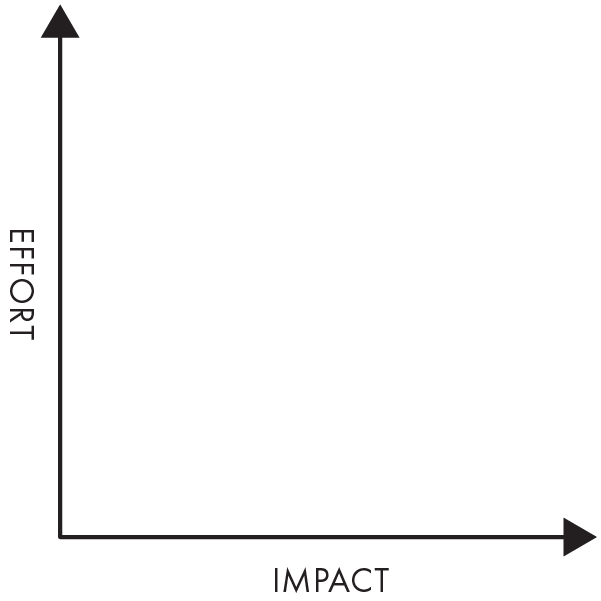
Give everyone Impact voting dots
Assign one color for Impact voting dots. Each person should get the same number of these dots as the total number of solutions you hope to have decided on at the end of the activity.
Example: I want to narrow down from 10 ideas to 3. Each person should get 3 dots.
Give everyone Effort voting dots
Assign the other color for Effort voting dots. Give everyone the same number of dots as you did in step #3. Everyone should now have 2 sets of equal amounts of colored dots.
Present the items to be prioritized
Have the person who proposed the idea present it. Share each item to make sure each person understands what it is. Transfer each of your proposed solutions to sticky notes and post them on the board.
Vote for Impact, then Effort
First, have everyone vote for the impact of each solution. Then, have each person vote on the effort for each solution.
Impact: how much value will the solution have for the user when solving their problem?
Effort: How many resources (money, people, technology, time, etc.) would this take to create?
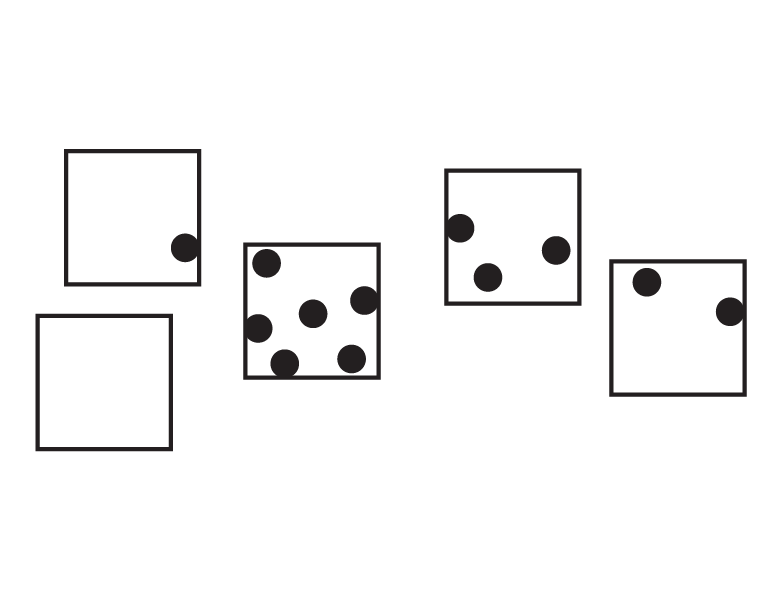
Place each item on the graph
Once everyone has voted, tally up the votes and place the ideas at the appropriate points along the axises.

Tip
The points aren’t fixed. Create points on the axes based on the tallied votes.
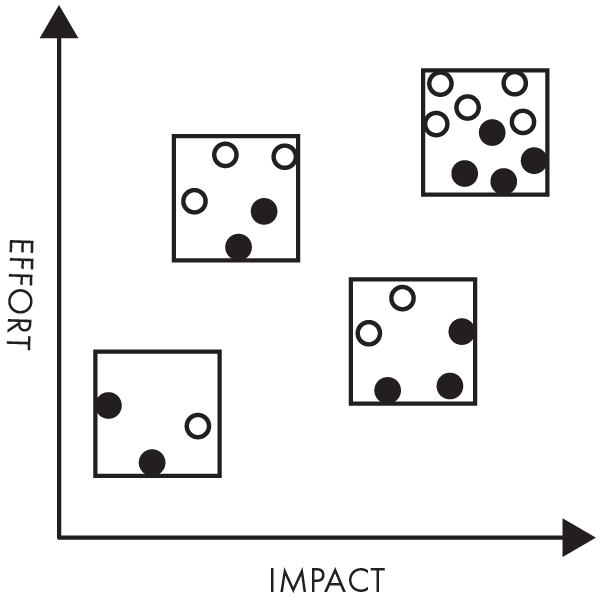
Reflect on the Prioritization Map
Take a look at the items on your graph. Decide which ones you want to pursue.
There are 4 areas that the items can fall into:
High-impact/low-effort area
These items that should be acted on.
High-impact/high-effort area
These items carry more of a risk but have potential for a big payoff.
Low-impact/low-effort area
These items are easily attainable but might not bring much value.
Low-impact/high-effort area
These items have a low return on investment and should be removed from consideration for now.