Problem Framing
Define an initial problem statement.
All projects and challenges have a starting point. In this activity, you’ll ask 2 sets of 4 questions to understand the scope of the problem. Problem Framing will help you define the problem and explore if it is the one to solve.
Framing the initial problem statement from the user’s perspective will help you begin to understand what is important to the user. The quality of ideas is dependent on the quality of the problem statement.
 2-6 people
 1-2 hours
What you’ll need
- Pens or markers
- Sticky notes
- Easel pad or whiteboard
Prerequisite Activities
- None
Downloadable Materials
Instructions
Setup the workspace
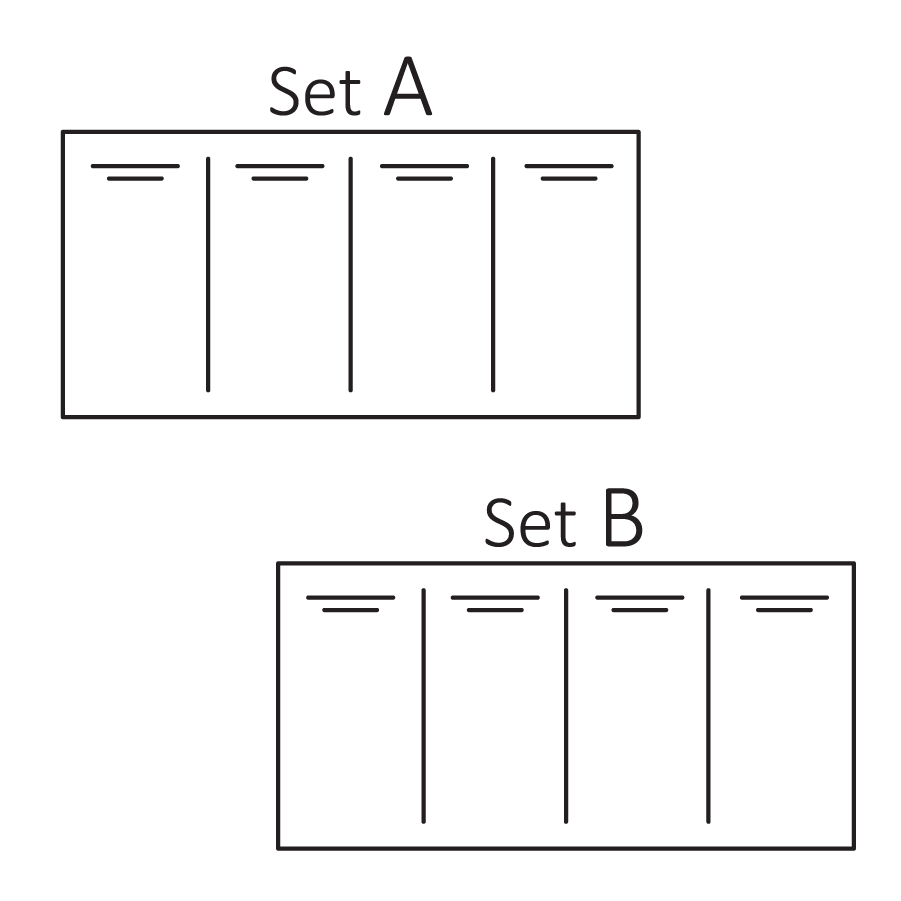
First, create Set A with 4 columns and label each column with: what, who, where, and why. Next, create Set B with 4 columns and label each column with: reset constraints, go broad, break it up, and ignore it.
State the problem
Write the problem in an area where everyone participating can refer to it at any time.
Understand the problem
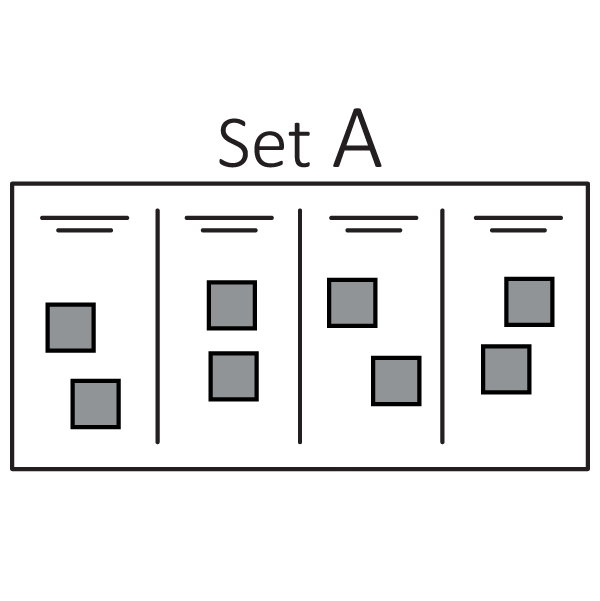
Add details about the initial opportunity to Set A columns. Answer each question as thoroughly as possible, from your team’s point of view. Write an answer on a sticky note, one answer per note. Place them in the appropriate column.
What
What is the nature of this problem? What supporting evidence do we have to prove this? What goal was the user trying to accomplish?
Who
Who is this problem impacting? Consider both the user and the business.
Where
Where does this problem occur? Have we observed this problem in its natural environment?
Why
Why should we solve this problem? What are we trying to achieve by solving this problem? What are the business objectives and user-impact objectives?
Explore the problem
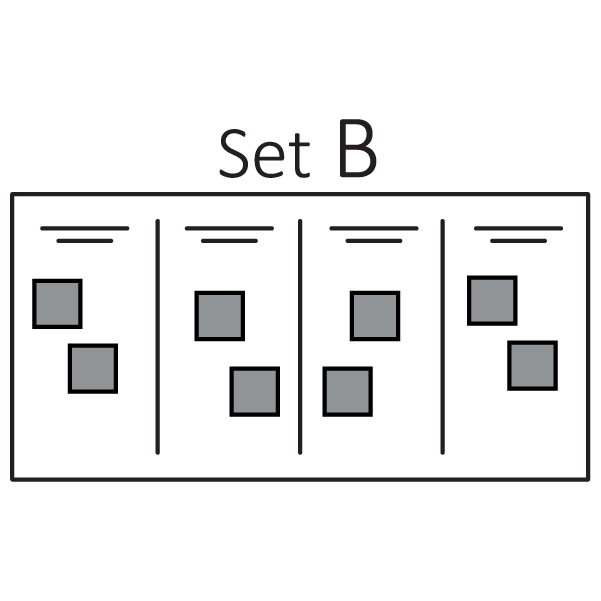
Look at this opportunity from another perspective to Set B columns. Answer each question as thoroughly as possible, from your team’s point of view. Write an answer on a sticky note, one answer per note. Place them in the appropriate column.
Reset constraints
What constraints have we set on this problem? Are these constraints real or assumptions? What happens when we remove each of the limitations?
Go broad
Does the problem already have a solution? What happens if we remove the solution? How does the opportunity change?
Break it up
How can this problem be broken into five smaller ones? It may be necessary to solve smaller ones before the larger problem.
Ignore it
What happens if we do not solve this problem and choose to solve a different one?
Discuss with the team
Review each column and discuss. What did you learn? Is there an area that needs more clarity and further research?
Write an initial problem statement
Summarize what you have into 1 sentence. It should include a user (the person who has the problem), the user’s need (the goal, job, or activity that the user aims to accomplish; your solution will be providing a way for the user to achieve this), and the user’s current situation (supporting information about the user; ideally from research data).
Use this as a guideline:
The user ________ [user’s name] ________
needs a way to ___ [a goal, job, or activity the user aims to accomplish] ___
because _________ [supporting information about your user] ________.